
Frozen meat unloading, grinding, buffering, weighing, mixing system
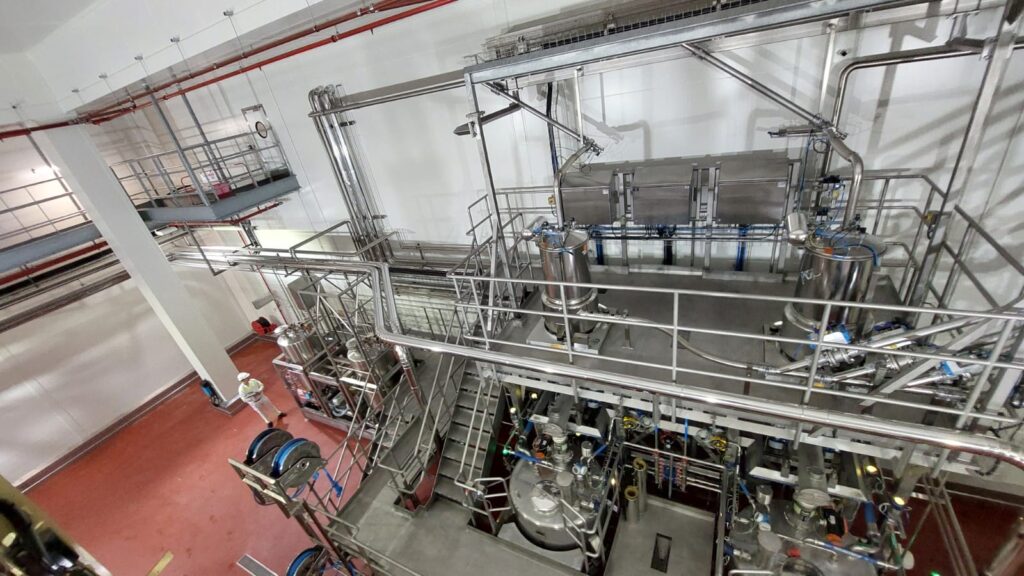
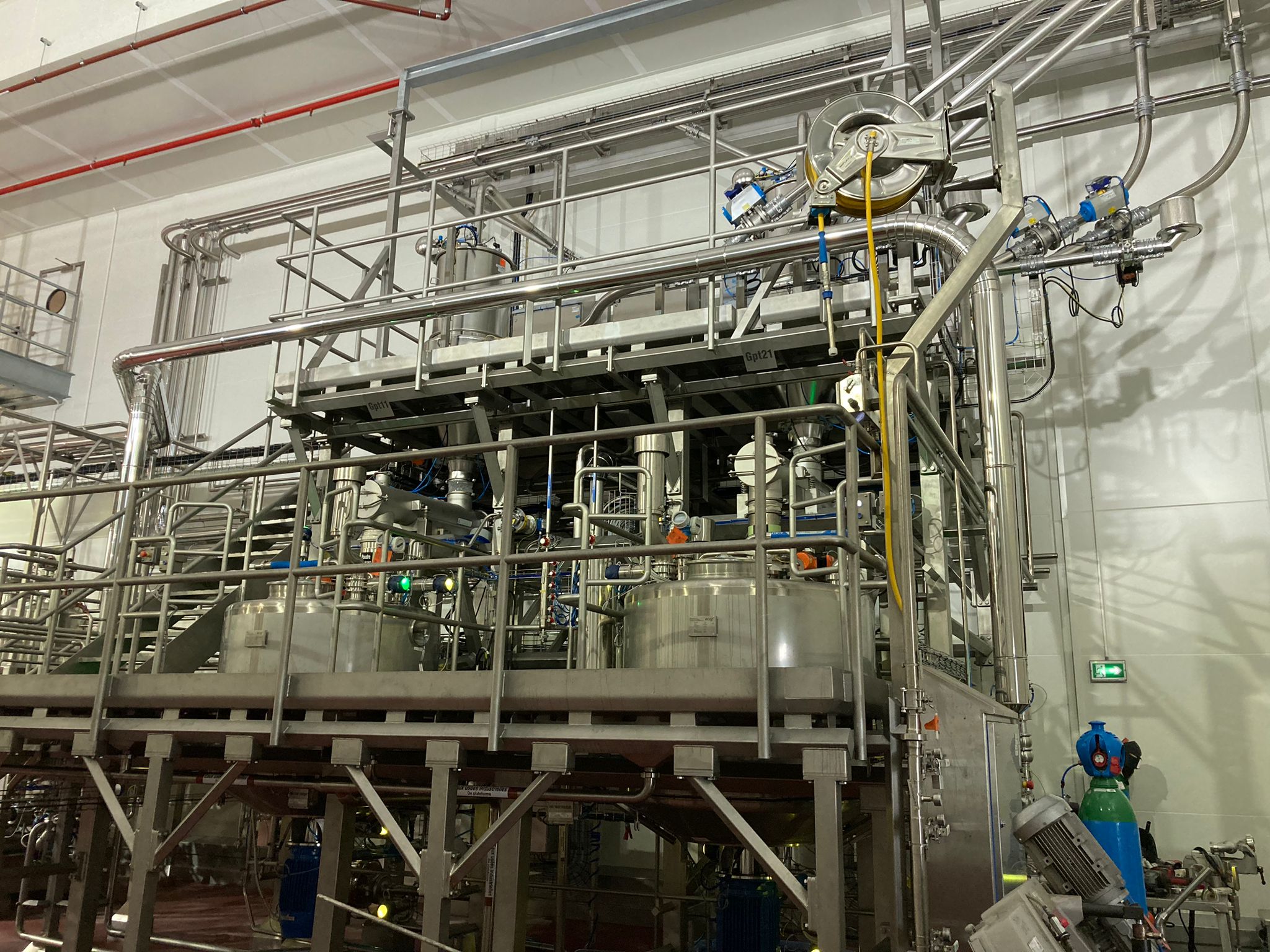
Gravy solution preparation system – dissolving bulk raw materials in water using mixers equipped with high shear mixers and inline mixer grinding pumps.
Effect
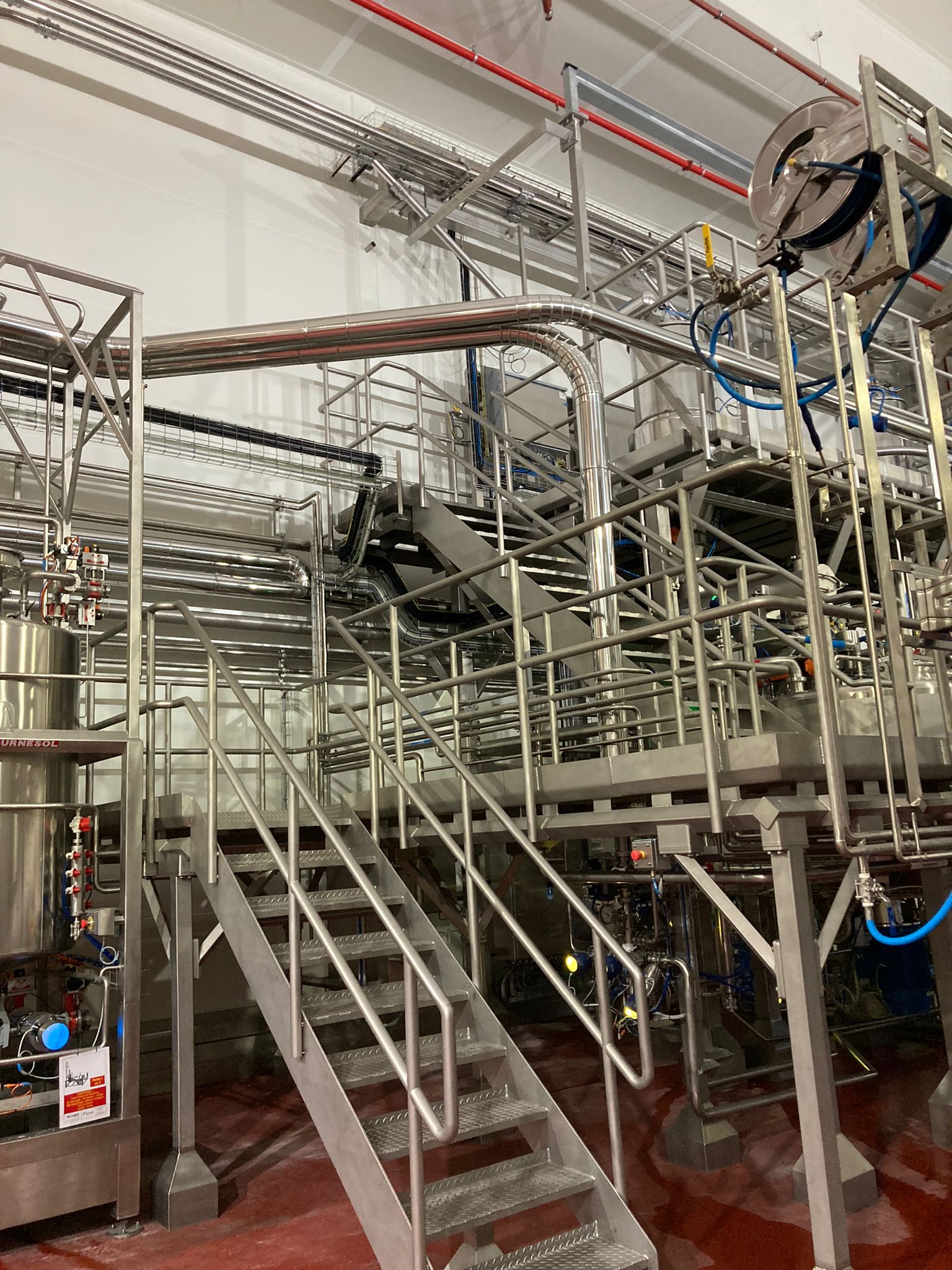
- delivery and integration of a system of 2 process tanks (process skid) used to prepare sauce from bulk and liquid products
- delivery and integration of a system of 4 buffer tanks (buffering skid) receiving the finished mixture from the process tanks
- delivery and integration of a system for pumping the product from the process skid to the buffer skid
- delivery and integration of a pigging system on the transfer line between the process and buffering skid
Benefits
- automation of the weighing and mixing process
- closed mixing and transfer system = elimination of manual transport of the semi-finished product between operating nests
- pigging system allows to reduce the amount of post-production waste
- modern mixing systems allow to speed up the preparation of a mixture that meets the quality requirements of the product
Solutions
mixers equipped with high shear mixer
automatic pigging and cleaning systems (CIP)
grinding pumps, so-called inline mixers
More projects
CIP cleaning
CIP cleaning CIP cleaning (Clean In Place) is the automated cleaning of pipes, tanks and equipment without dismantling them. Instead of taking pipes apart and cleaning tanks by hand, water, cleaning solutions and disinfectants are pumped through the installation in a set sequence. A typical cleaning cycle looks like this: pre-rinse with water, which removes
Migration
Migration Migration in industrial automation is the transfer of a control system, software or data from an old platform to a new one, while keeping the existing functions of the installation. Control systems age faster than the machines they control. Manufacturers phase out older controller models and software versions, stop supporting them and stop producing
Retrofit
Retrofit A retrofit is the upgrade of an existing machine, line or installation by replacing or adding selected components, rather than replacing it entirely with a new one. Many machines and installations in plants have a sound mechanical structure that could keep running for many years, but their electrical systems, automation or certain components are
ROI (return on investment)
ROI (return on investment) ROI (return on investment) is an indicator that shows how much a company has gained from an investment relative to its cost. ROI is calculated by comparing the profit or savings generated by an investment with the amount spent on it. The result is expressed as a percentage: ROI = (return
HMI (human-machine interface)
HMI (human-machine interface) An HMI (Human-Machine Interface) is a screen, usually a touchscreen, mounted next to a machine or line, through which the operator can see what is happening in the installation and give it commands. A PLC controls the installation, but it has no screen or buttons through which a person could communicate with it.
PLC (programmable logic controller)
PLC (programmable logic controller) A PLC (programmable logic controller) is an industrial computer that controls the operation of machinery and installations. The PLC is the “brain” of an installation. It works in a continuous cycle: it reads signals from sensors, such as temperature, pressure, tank level or valve position, it runs the program written into
Hygienic Design
Hygienic Design Hygienic design is a set of principles for designing machinery, equipment and installations so that product residue and bacteria do not build up in them, and the whole system can be cleaned easily and effectively. Hygienic design principles cover, among other things: materials: stainless steel and plastics approved for food contact are used,
Cross-contamination
Cross-contamination Cross-contamination is the transfer of residues of one product, raw material or contaminant into another product. Cross-contamination can occur when different products pass through the same equipment, pipes or tanks, and something is left behind from the previous product. It can also occur via tools, packaging, air, or workers’ hands and clothing. The consequences
Changeover
Changeover A changeover is the process of switching a production line from making one product to another. A plant often produces several products on a single line, such as different flavours, colours, scents or pack sizes. When the product changes, the line has to be prepared for the new task: emptied of the previous product,